THE TECHNOLOGY / WHAT WE’RE BUILDING
A field biologist’s new point of view.
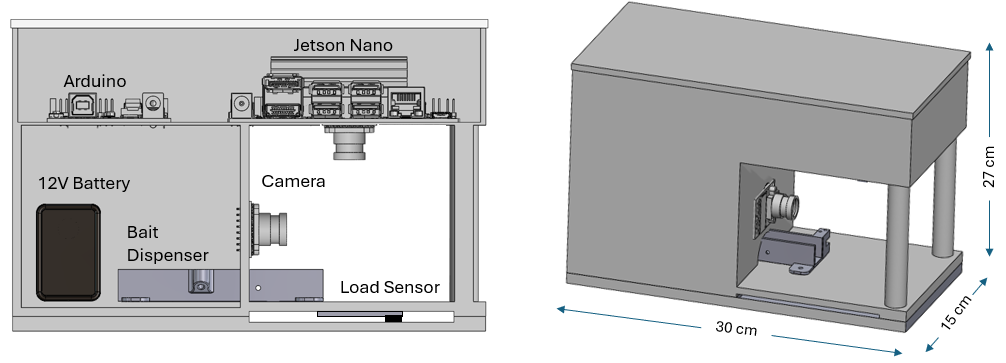
Wildmarker brings cameras, intelligent software, and physical sensors into one compact instrument—with an open invitation for wildlife.
EXPLORE THE SYSTEM
01 / DUAL CAMERAS
See the visitor
Two infrared cameras provide complementary views of visiting animals. A break-beam sensor triggers image capture, allowing the processor to conserve power between encounters.
ONE VISIT. A CHAIN OF DISCOVERY.
From encounter to evidence.
Arrive
An edible attractant encourages a voluntary visit.
Observe
A sensor wakes the cameras and processor.
Interpret
Algorithms identify and measure the visitor.
Record
The instrument stores the encounter for analysis.
THE WORK SO FAR
Promising beginnings.
Rigorous next steps.
Summer 2023 prototypes collected more than 37,000 small-mammal images. Preliminary work demonstrated that animal detection and species classification could run on the device in the field.
The funded research tests the harder questions: similar species, returning individuals, reliable measurement, and sustained operation outdoors.
See the validation plan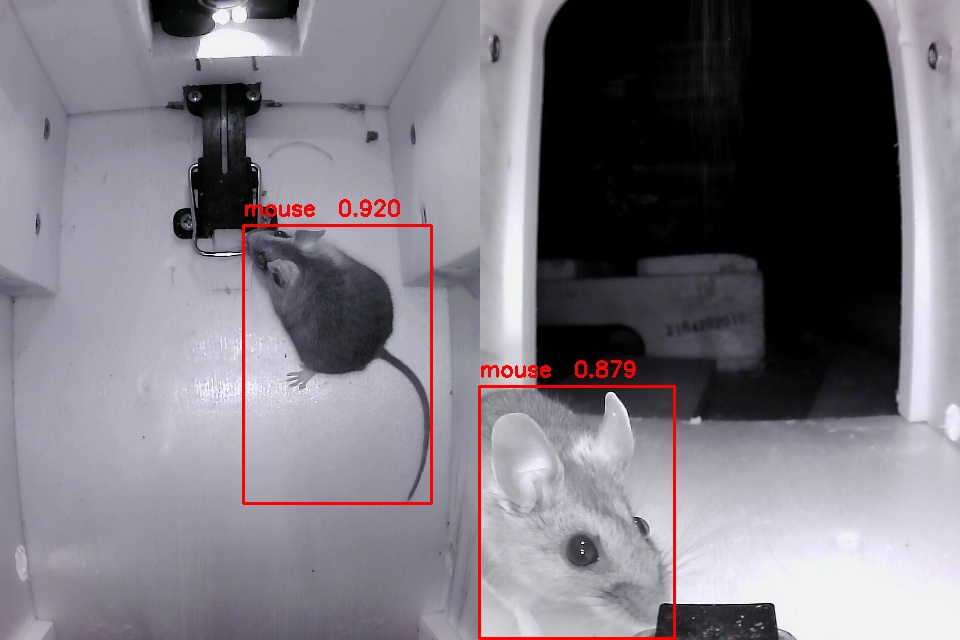
A FEW GOOD QUESTIONS
Designed around the animal.
Does Wildmarker capture animals?
The proposed monitoring instrument uses an open-sided stage. Animals visit voluntarily and are not held captive. Conventional trapping remains part of the independent field work used to validate the new instrument.
Can it recognize every individual already?
Individual recognition is a research objective, not a finished capability. The team will train models on naturally occurring variation and evaluate them against reference identities from animals already tagged in ongoing field studies.
Is Wildmarker available to purchase?
The NSF project is developing and validating the instrument. This site does not announce a commercial release. The proposal describes future documentation for non-commercial users and possible commercialization after successful development.
What about solar power and satellite communication?
Both are planned components of the second-generation instruments. The timeline describes proposal milestones and does not imply that every feature is already deployed.
A SHARED CURIOSITY. A SHARED FUTURE.